by Joy Kosta Ben Heineman, GE's former senior vice-president for law and public affairs and currently a senior fellow at Harvard Law School and at Harvard's Kennedy School of Government, also author of "High Performance with High Integrity," says that effective leaders “find a sound balance between...
Trust is an essential human attribute and virtue. When we are born, we are completely helpless and at the mercy of others. We instinctively trust that someone will look after us, nurture us, protect us. Being trusting and being trustworthy are central tenets of what it means to be a human being...
We all know the days of expecting a job for life are over. Job security as we knew it is gone. This begs the question, if that was the psychological contract, what is the new psy
If organizations are going to evolve from the hierarchical, command-and-control structure that has dominated over the past century to a new model where trust, transparency and meritocracy are guiding principles, they're going to need to change the way they develop leaders. To gain some insight into how the leadership development process is adapting to the challenge of creating leaders who are inclusive, progressive, and able to look beyond their organization for great ideas, we turned to the MIX community. With our partners at HCI, the Human Capital Institute , we sponsored the HCI Human Capital M-Prize on Leadership , and we asked you to share your stories on leadership development.
Clearly, you've given this trust thing some thought. We're off to a good start with these 15 tweets. I'm seeing at least four qualities that run as themes throughout this list: Transparency Responsiveness Consistency Courtesy One idea that hasn't been put forward yet is something that Whole Foods...
While the global financial meltdown and its aftershocks have unleashed a flood of indignation, condemnation, and protest upon Wall Street, the crisis has exposed a deeper distrust and implacable resentment of capitalism itself.
Often, when I'm invited to speak to boardrooms, I start by gently saying: "Listen up folks. Business is brain-dead. Right now, even as we speak, your business is probably undergoing a slow, barely perceptible, but wholly pernicious brain death." I might take a custom-made, baby-soft $2000 loafer to...
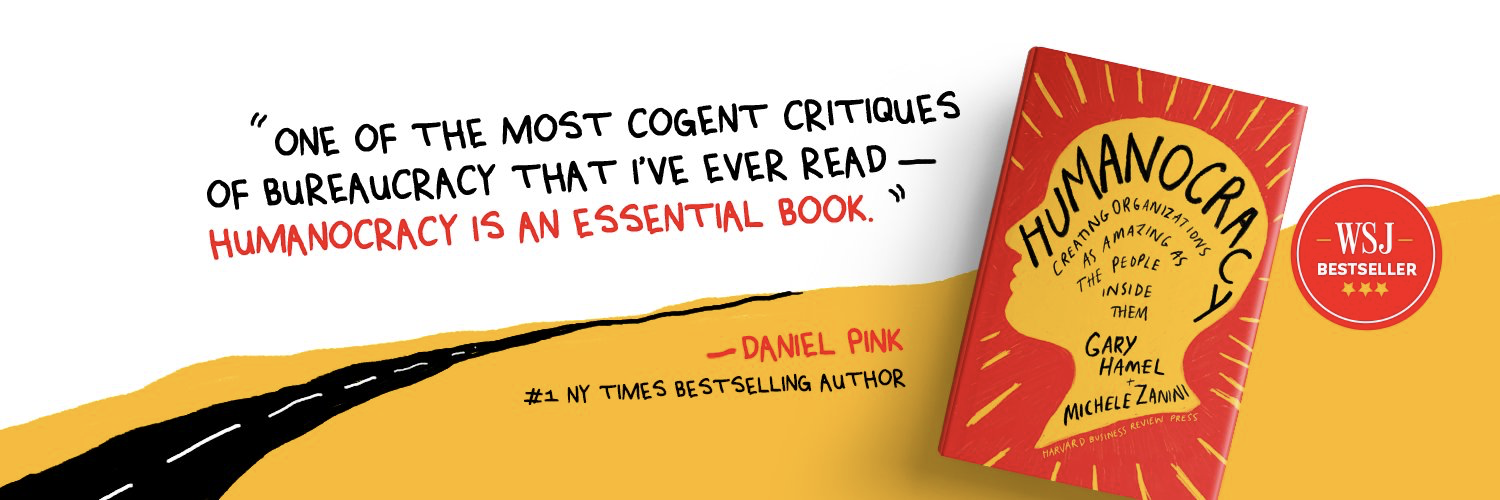
We have a big dream here at the MIX: to create organizations that are fit for the future--and fit for human beings. It's an aspiration that calls for nothing less than what the philosopher and reformer John Dewey described as a "new audacity of imagination." While "modern" management has delivered an immense contribution to global prosperity, the values driving our most powerful institutions today are fundamentally at odds with those of this age--zero-sum thinking, profit-obsession, power, conformance, control, hierarchy, and obedience don't stand a chance against community, interdependence, freedom, flexibility, transparency, meritocracy, and self-determination. It's time to radically rethink how we mobilize people and organize resources to productive ends.