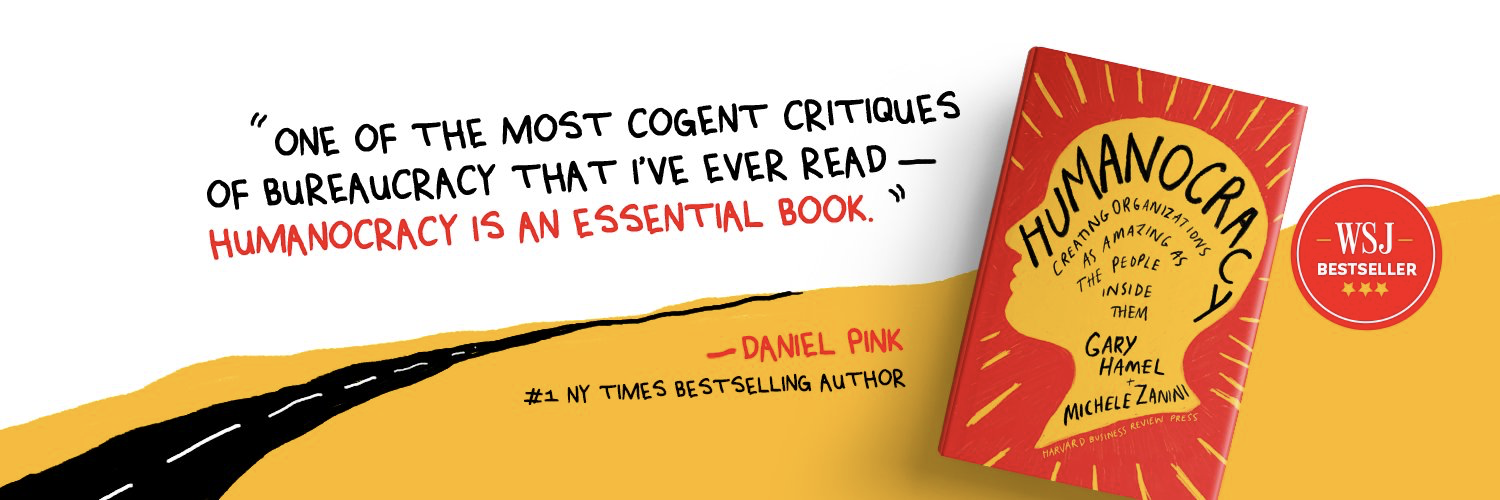
When you ask children what they want to be when they are older, how many of them say they want to be a manager? I've certainly never met one who had such aspirations. In part this is because management is a pretty amorphous concept to a ten-year-old. But it's also because we adults aren't exactly...
We recently ran an on-line brainstorming session we call “Quick MIX” focused on a topic related to the current Innovating Innovation M-Prize challenge . The question for the Quick MIX was: what is the one thing you’d change to make organizations more innovation-friendly? Last week we ran the first installment with eight provocative recommendations distilled from Quick MIX contributions. Read the second installment here for eight additional ideas.
MIX Maverick and Chief Innovation Officer for Dell Services Jim Stikeleather says that for an idea to be innovative it has to be forward-thinking, viable, sustainable, and valuable.
Training programs generate greater value for organizations when the curricula reflect key business performance metrics. Testing real-world outcomes is crucial. All organizations train their people, and most spend significant sums doing so. Yet they generally don’t have any idea whether they’re...
Leaders who have an understanding of neuroscience basics have a tool much like a navigational compass to guide their teams and individuals through common change related obstacles. Neuros
Chances are, innovation doesn’t work where you work—or only works some of the time, mostly in spite of your organization’s system and processes. Why? Because you don’t understand what makes the innovation game so different from everything else you do at work—and you haven’t adjusted your playbook to accommodate these differences.
Watch Gary Hamel, co-founder of the Management Innovation eXchange (MIX), discuss how to make innovation an everyday, everywhere capability. In this video blog, Hamel lays out three critical questions you can use to test the depth of your organization’s innovation competence.
How does a Dell engineer’s job change when they get to talk to customers? It opens up an information flow so they can co-create something better. You have to earn the right to sell to somebody. That’s why Dell is building relationships with customers and becoming trustied advisors through the Dell...
You thought you did everything right—gathered market research and consumer insights; brainstormed, prototyped, and tested a promising new idea; developed detailed financial models and a solid marketing plan. Yet your company’s new product or service didn’t perform as expected. What did you overlook?
What leader today doesn't want more innovation? Yet, producing more (of anything) inside an organization generally leads to more process, which smothers individual creativity and all-too-often kills organizational innovation. Innovation isn't about structuring a process to lead to an outcome so much as it's about creating space—both elbow room, the space to roam free of bureaucratic rules and red tape, and head room, the freedom to see differently, think wildly, and aim higher. The leaders who generate more creative energy and innovation are always wrestling with the question: How do we design in more slack? Or, how do we cultivate an environment and support work that enlists people as drivers of their own destiny and inventors of the company's future?