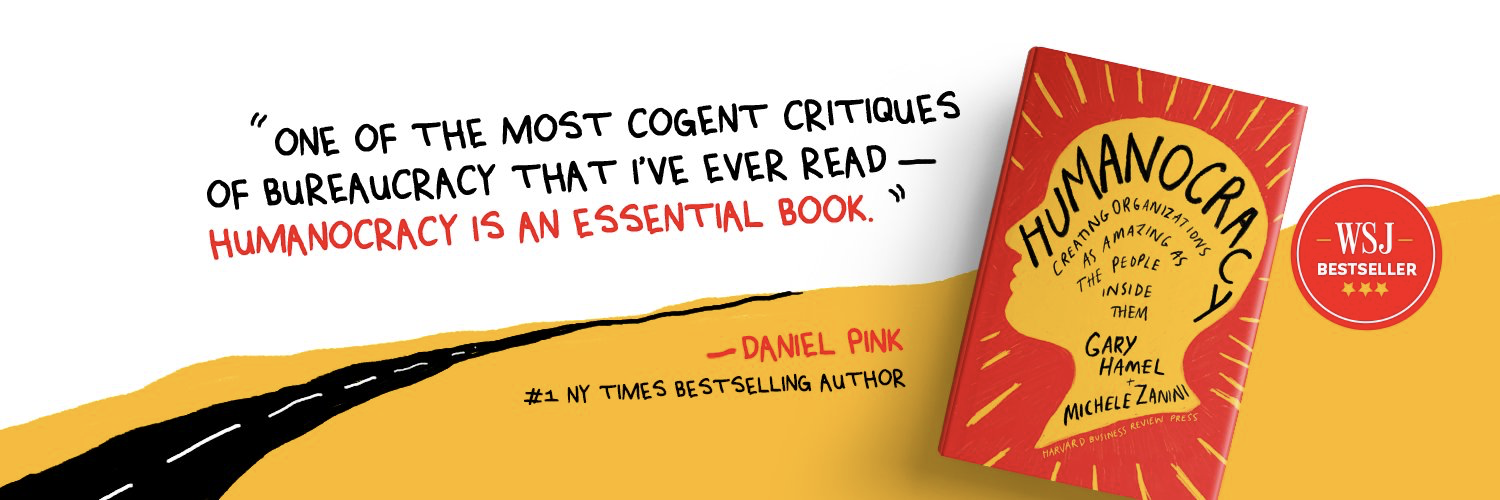
Twenty-first century companies are in great need of innovative leaders. They need men and women who know how to put new ideas to work effectively and responsibly in every corner of their organizations. They need people who will define what's next in our markets and societies. But that doesn't mean...
people engagement 1.0 is dead having an arrangement that creates significance & certainty, some variety and strong connection will flow to contribution & growth (innovation & discreti
First Line Manager: The Key to Greatness Is Enabling Not Delegating.I keep trying to get a university to realize first line management is different from upper management, to no avail.
An Anglican parish launches a bold experiment with a radical model of how to “do church,” by replacing hierarchy with communities of passion, and unleashing the capabilities of its c
As a reverse fairy tale for the CEO set, the reality television program Undercover Boss is fascinating, not so much in the witness-to-a-train- wreck mode of the rest of the genre, but because it is so revealing of our conflicted relationship with "the boss." The premise of the show—that the only way to get a clue about what's really going on in his (or her) organization, is for the boss to go undercover on the front lines—is all too often the actual reality in organizations of any size. Yet, at the same time, the view of the boss as the ultimate authority with the heroic power to swoop in and save the day—whether that means paying down a mortgage, granting an instant promotion, or banishing a reviled policy—holds sway in real life as well as on "reality" TV.